Conversational Commerce Platforms: What You Need to Know
Taking a closer look at tools for sales on social media and messengers.
Studies confirm what many of us have been noticing: customers are getting more impatient than ever before. And while waiting for a text reply from a brand rep is less annoying than being stuck in a line in a brick and mortar retail store, the bar is continuously set higher and higher. In live chat, for example, a 1-minute delay causes 60% of customers to abandon the chat.
Over the past decade, we've seen how messaging apps and social media became the most popular types of apps. For e-commerce, the most effective way to connect with customers on these apps is using a dedicated platform for conversational commerce. In this article, we'll explore how such software works, what its benefits are and how to pick the right option.
What conversational commerce is
Conversational commerce refers to the selling of goods and services via messaging apps (WhatsApp, Telegram, etc.), social media (Facebook, Instagram, etc.), live chat widget, and voice AI assistants.The term was coined by Chris Messina, former Uber developer lead, in 2016. Since then, conversational commerce has grown rapidly. The market is projected to reach $22.5 billion by 2031, growing at a CAGR of approximately 12% from 2026. Real-time, context-aware dialogs replace static web forms, facilitating purchases and reducing cart abandonment.
How conversational commerce platforms work
Conversational commerce platforms combine messaging apps, chatbots, CRM systems, as well as product catalogs and payment gateways into a unified system. These tools turn the entire buying journey into a single, continuous conversation between brand and customer.
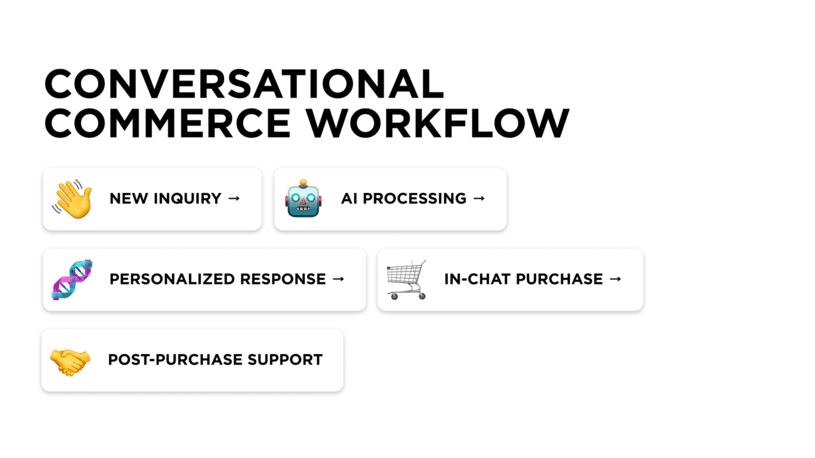
1. Inquiry entry point. A customer initiates contact or the brand contacts them through the platform. It could be a WhatsApp message or a pop-up chat on a website asking "Need help?". A conversational commerce platform determines the communication channel, pulls up the customer's history of interactions, and launches the most relevant dialogue scenario.
2. AI processes inquiry. Once a message is received, the AI and NLP (natural language processing) engine identifies the customer's actual intent. For example, "Where is my order XYZ?" prompts the bot to check the system and return the order status. Advanced conversational commerce tools also guide the customer toward the next best action.
3. Response gets personalized. Conversational platforms pull data simultaneously from CRM (purchase history, customer segment, average order), product catalog (stock availability, pricing, promotions, similar products), and behavioral analytics (viewed pages, saved items, abandoned cart) to create relevant product recommendations.
4. In-chat purchase. With some channels, purchases can happen right inside the conversation. The customer views a product card, clicks "Buy," confirms a pre-filled delivery address, and completes payment using Apple Pay, Google Pay, or a card. This significantly shortens the customer journey from product discovery to checkout.
5. Post-purchase assistance. Effective conversational commerce platforms automatically send an order confirmation, provide a tracking number when the shipment is dispatched, request a review a few days after delivery, and recommend complementary or repeat-purchase products, turning a single order into a long-term relationship.
Key features to look for in conversational platforms
When picking the most suitable conversational commerce tool for your business, pay close attention to the following aspects.
AI capabilities
To be truly effective, a conversational commerce platform should provide more than scripted chatbot replies. Advanced machine learning and Natural Language Processing enable it to actively crawl a company’s internal documentation, answer complex inquiries, and analyze customer sentiment in real time.
In addition to working 24/7, AI-powered platforms can accurately measure customer satisfaction compared to traditional surveys, which can be flawed if customers are reluctant to fill in questionnaires. For example, Dialpad’s AI-powered CSAT provides immediate and predictive CSAT scoring combined with SMS surveys and granular performance tracking. It allows managers to evaluate customer sentiment and agent success without waiting for traditional survey results.
Omnichannel messaging
A conversational commerce platform should meet customers wherever they prefer to communicate in their daily lives and with other brands. Whether it's WhatsApp, Instagram, Facebook Messenger, SMS, or live website chat. A truly effective solution integrates all popular channels into a unified interface, allowing agents to track conversation history and context across platforms, ensuring seamless and consistent customer experiences regardless of the channel used to initiate new interaction.
For example, Umnico omnichannel messaging platform consolidates messages from social media, messaging apps, and live chat widgets into a single window. It enables businesses to manage all client interactions, sales pipelines, and support requests in one place, ensuring seamless communication across channels without missing incoming inquiries or details of previous interactions.
Extensive automation
Top-tier conversational commerce platforms allow to build abandoned cart recovery sequences to recapture lost revenue, along with proactive post-purchase communications like order confirmations, shipping updates, and review requests.
For instance, if a registered customer adds a product to their cart but leaves the website, the system automatically triggers a personalized WhatsApp message 30 minutes later, offering a temporary 10% discount. Once the customer completes checkout via the WhatsApp chat, the software sends shipping updates and, a week later, a satisfaction rating request.
Seamless agent hand-off
While AI, bots, and automation are certainly having a moment, nothing beats the human touch in certain scenarios. When dealing with complex issues or high-value VIP customers, a platform must smoothly hand off the conversation to a live agent. The transfer must include the entire conversation history and context, ensuring the customer never has to repeat their details.
For instance, a customer might reach out to a bank’s chatbot if their card declined and they suspect fraud. The system instantly hands the chat (with a transcript) to a specialized fraud agent. The agent jumps in right away: “I see you’re worried about that $500 charge; I’ve already frozen your card temporarily and can help you dispute it,” turning a stressful moment into a smooth customer support experience.
Integrations
A conversational commerce software should be able to integrate with your existing technology stack, including CRM system, e-commerce and inventory management tools. This allows you to automate synchronization across platforms and ensure that every conversation is based on a complete purchase history and preferences. For example, REI Systems uses REINA AI assistant, which integrates directly into Salesforce to analyze, summarize, and answer questions about complex documents without leaving the CRM.
Benefits for business
Integrating a platform for conversational commerce into the workflow improves both sales and support of a brand. Let's explain how exactly in detail.
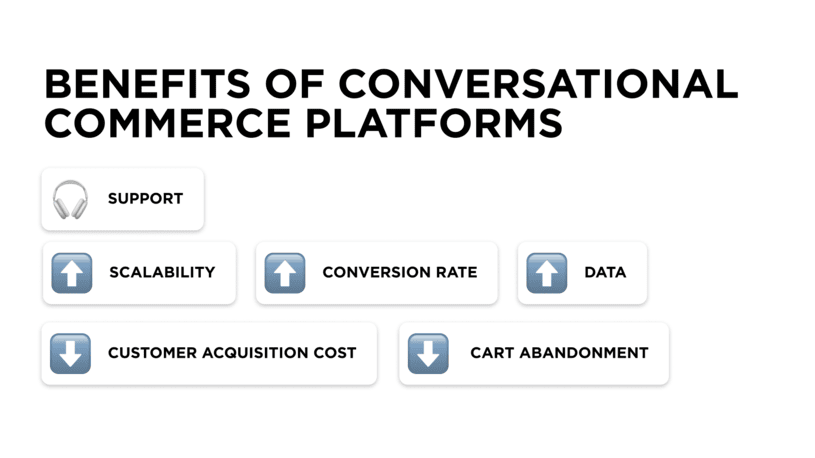
- Higher conversion rate. Studies show that sales in real-time chats provide 30% higher conversion (with some even saying conversation marketing via messaging apps and social media can generate up to 10 times more qualified leads) compared to standard e-commerce practices.
- Decreasing cart abandonment. The average cart abandonment rate is 70% across industries. Reaching out to a customer in live chat while they are about to leave the website is an effective way to dispel any doubts, leading to a completed purchase.
- Round-the-clock support. Using AI-chatbots in text-based channels via conversational commerce platforms allows a brand to provide instant replies to typical inquiries, such as delivery status, product availability, and so on, without the need to have agents taking night or weekend shifts.
- Lower customer acquisition costs. Messaging apps like WhatsApp and Telegram, with their billions of active users worldwide, offer an alternative to the growing costs of paid advertising. By launching campaigns where your customers already spend their time, you can connect with buyers in a space that feels natural, not intrusive, and save budget.
- Better scalability. A conversational commerce platform with an AI bot can handle thousands of conversations simultaneously. While your business may grow rapidly, your support team stays lean, while the customers still get instant answers.
- Rich customer data. Every chat with a customer provides numerous insights. A conversational commerce platform that can analyze and organize those is more valuable than anonymous website analytics. Conversational data tells you exactly which product features excite people, which website pages confuse them, and so on, helping your brand stay competitive.
Examples of conversational commerce platforms
While the choice heavily depends on a company's budget and existing tech stack, here are some of the most prominent conversational commerce tools on the market right now.
Tidio
Tidio integrates live chat, multichannel messaging (Instagram, Messenger, Email), and advanced AI chatbot directly into e-commerce storefronts like Shopify and WooCommerce. Its commerce-specific features allow businesses to view a visitor's shopping cart and order history in real-time, proactively trigger personalized product recommendations, offer automated discount codes, and resolve shipping or product queries instantly.
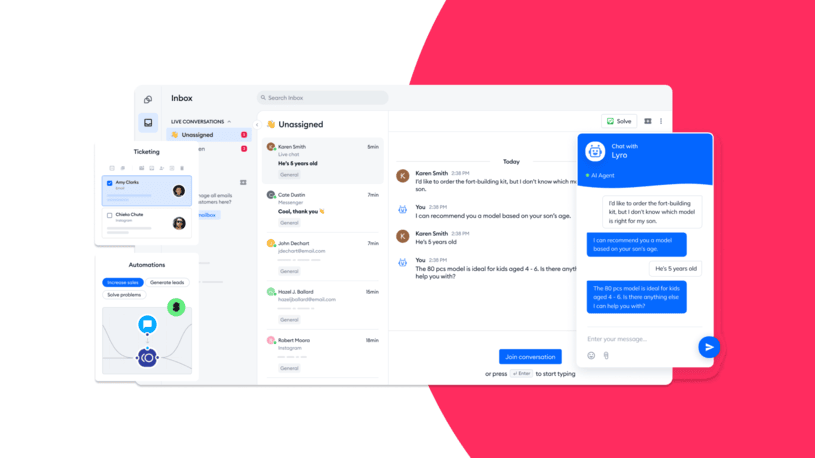
A free pricing plan includes live chat for up to 50 conversations, 100 chatbot triggers, ticketing, and basic integrations, while a more advanced Starter plan starts from $29 per month.
Zendesk Messaging
The platform enables businesses to engage customers across live chat, WhatsApp, Facebook Messenger, Instagram DMs, SMS, and email from a unified workspace. Its AI-powered chatbots can handle pre-purchase inquiries, product recommendations, order tracking, and even facilitate in-chat transactions.
Zendesk's Sunshine Conversations API layer allows businesses to embed rich, interactive elements like carousels, payment buttons, and product catalogs into messaging conversations, turning support chats into sales channels. The Basic pricing plan starts from $55 per month per agent.
Drift
Drift is an enterprise-focused conversational commerce platform. It enables businesses to engage qualified website visitors in personalized conversations instantly. Its core functionalities include routing high-intent visitors to the right salesperson, booking meetings inside the chat, showing product recommendations and custom offers based on visitor behavior.
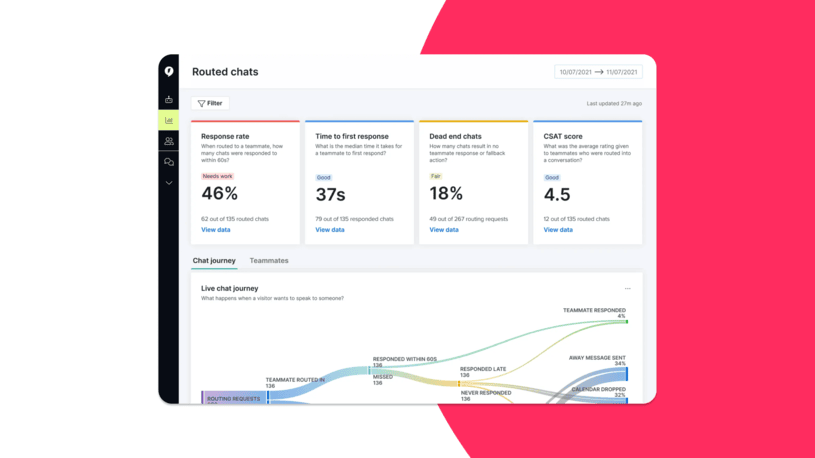
Drift doesn't publicly list exact prices, operating solely on a quote-based model.
Gorgias
Gorgias provides deep integrations with e-com platforms like Shopify, providing agents with full context of every chat with a customer (their purchase history, shipping status, lifetime value, etc.). A built-in AI can effectively automate the processing of repetitive inquiries, such as refunds or canceling subscriptions. Just as other platforms, it centralizes all text-based customer communication in a single helpdesk interface.
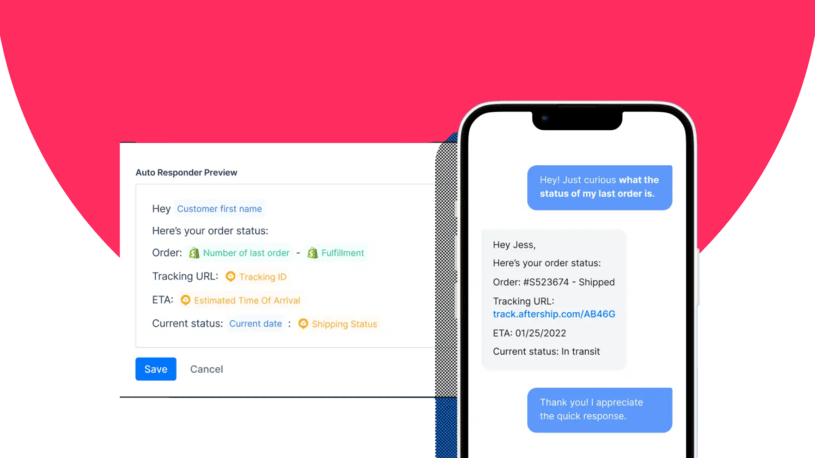
The Starter plan, which includes up to 50 tickets, costs $10/month + $0.40 per extra ticket.
Intercom
Intercom positions itself as an all-in-one customer engagement platform that powers proactive support and conversational sales for tech and digital businesses. It unifies live chat, in-app messages, email, chatbots into a single workspace. Intercom boasts sophisticated customer base segmentation and integrations with Salesforce and HubSpot, offering wide capabilities for personalizing the entire customer journey from the first visit to repeated purchases.
The Essential plan starts from $39/seat/month and includes basic live chat, bots, in-app messaging capabilities.
How to choose the right platform for your team
When picking the tool for conversational commerce, use the following checklist to make an informed decision.
- Start with goals. The platform's capabilities should mirror what you plan to achieve. Decrease average inquiry processing time? Or increase sales? Knowing this from the start helps to pick the correct tool rather than the one that looks impressive on paper.
- Decide on channels. If half of your customer interactions happen via Direct messages on Instagram, choose the platform that offers the best integration with that social media channel. Choose the solutions that prioritize channels important to your brand.
- Ensure regulatory compliance. Depending on the geographical region and industry, make sure the conversational commerce platform complies with relevant requirements for data processing and storage (GDPR, CCPA, etc.), payment security (PCI-DSS) and so on.
- Start with a pilot. It is always safer to start with a test drive of new software in a controllable environment before rolling it out for the whole team. Assign a team that will work with the platform daily for 2-4 weeks. Based on their feedback and results, you will be able to decide whether to sign a 1-year contract or continue the search.
Frequently asked questions
In this section we provide answers to common questions regarding conversational commerce software.
What exactly is conversational commerce?
Conversational commerce is the sale of goods and services through messaging apps, social media platforms, live chat widgets, and voice AI assistants. Customers interact with a bot or live agent to discover, explore, and purchase products.
What is an example of conversational commerce?
A prime example is shopping through Instagram DMs. After clicking on a sponsored post, customers can message the brand to ask about sizing, colors, or delivery times, receive product cards in the chat, and complete their purchase through an in-app checkout link. All interactions happen without leaving the social media app.
Is it safe to process payments inside chat?
Yes, when you use reputable conversational commerce software with end-to-end encryption and strict PCI-DSS compliance. Always verify your vendor's security certifications before enabling in-chat payments.
What is an example of a conversational AI tool?
Conversational AI tools use natural language processing (NLP) and machine learning to engage users in human-like dialogue. These include AI-powered chatbots that engage website visitors in real-time, social media automation that function as 24/7 virtual assistants, delivering personalized product recommendations and processing orders without increasing headcount or operational costs.
Summing things up
With customer communication becoming more bi-directional (from customer's perspective) and proactive (from brand's perspective), adopting a conversational commerce platform is one of the best things a brand can do to take sales and support to the next level.
Don’t treat these tools as a magic pill — plan in detail which communication channels you will link to the platform, what you should automate and what requires a human touch, and how the new software aligns with your business goals and fits into the existing tech stack.
If you're looking for a budget-friendly way to manage conversational commerce from a single platform, give Umnico Inbox a try. The omnichannel messaging platform supports the majority of popular messaging channels, comes with automation and chatbot capabilities, and CRM integrations. Every new user is eligible for a free trial period.



Subscribe to Umnico news!
Be the first to get recommendations and up-to-date information